





Key Takeaways
- The 2027 Jeep Wrangler starts around $33,000 for the base Sport trim, while the Grand Cherokee opens at approximately $39,000 for the Laredo.
- The Wrangler Rubicon offers solid axles, locking differentials, and over 10 inches of ground clearance for serious trail use.
- The Grand Cherokee tows up to 6,200 pounds when properly equipped, compared to the Wrangler's 3,500-pound maximum with the V6.
- Wranglers retain 65-70% of their original MSRP after five years, versus 50-55% for the Grand Cherokee.
- The Grand Cherokee is the quieter, more spacious daily driver with up to 70.8 cubic feet of cargo room.
Shoppers at Reed Jeep RAM of St. Joseph often narrow their search to two vehicles wearing the same seven-slot grille: the Jeep Wrangler and the Jeep Grand Cherokee. Both are capable, both carry the Jeep name, and both handle a North Missouri winter without hesitation — but they're built for different lives. Whether you're a rugged off-road SUV owner chasing trails near Watkins Woolen Mill State Park or a family driver commuting along I-29, this comparison breaks down which Jeep actually fits your routine.
Which Jeep Fits North Missouri Roads, Winters, and Weekend Adventures?
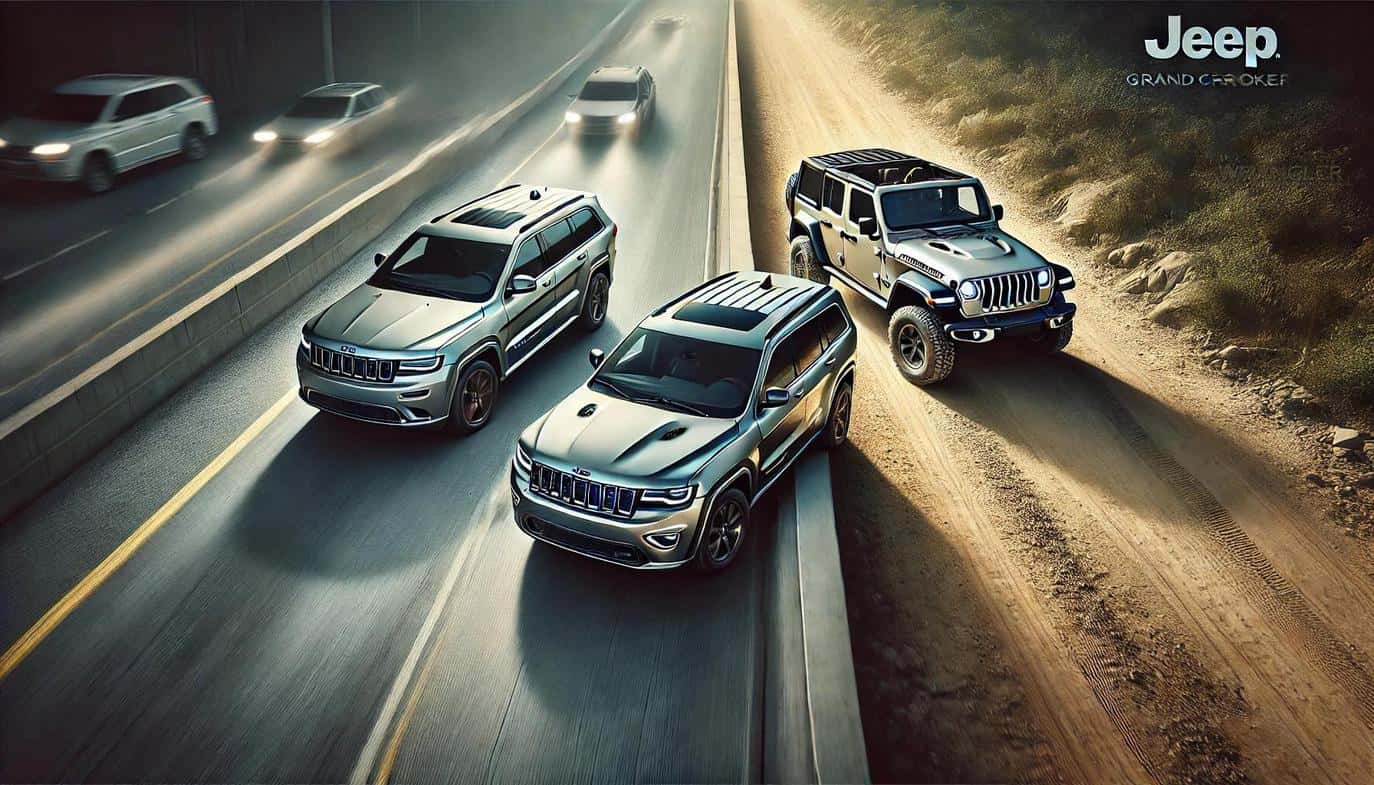
Both Jeeps handle St. Joseph's roads confidently, but they answer different needs. The Wrangler favors gravel access and trail terrain around Buchanan County, while the Grand Cherokee favors comfortable highway miles between St. Joseph, Cameron, and Savannah.
How do Midwest winters and road salt factor into the choice?
Winter road salt is unavoidable in North Missouri, and both Jeeps benefit from regular undercarriage attention once the snow melts. Available four-wheel-drive systems on both models help with traction on icy roads, but neither is immune to salt-related corrosion over time.
Reed Jeep RAM of St. Joseph's factory-trained technicians perform seasonal maintenance that keeps either vehicle running reliably through freezing temperatures and salt exposure. Owners can schedule service for undercarriage inspections and fluid checks before winter sets in.
Gravel roads and trail access around St. Joseph and Watkins Woolen Mill State Park
Buyers who explore unpaved roads and state park trails will notice the difference quickly once they leave pavement.
Watkins Woolen Mill State Park, a short drive from St. Joseph, offers a 3.8-mile paved trail that loops the lake, plus a separate equestrian trail. The paved loop suits either Jeep, but reaching more remote gravel access points around Buchanan County favors the Wrangler's higher clearance and off-road hardware.
Is the Jeep Wrangler or Grand Cherokee Better for Off-Roading?
The Wrangler is the clear off-road winner. Its solid front and rear axles, electronic locking differentials, and available disconnecting sway bar let it crawl over terrain the Grand Cherokee's unibody chassis can't match.
What makes the Wrangler Rubicon a serious trail machine?
The Rubicon trim is Trail Rated from the factory, pairing locking differentials with a disconnecting front sway bar and 33-inch mud-terrain tires. It offers over 10 inches of ground clearance, giving it the approach and departure angles needed for rock crawling and deep mud. Buyers set on a Rubicon can browse current new Jeep Wrangler inventory to compare trims in person.
How capable is the Grand Cherokee Trailhawk on moderate trails?
The Trailhawk pairs Quadra-Drive II with an electronic limited-slip differential, air suspension for added clearance, and underbody skid plates. It handles moderate trails and unpaved roads confidently, but its independent suspension limits wheel articulation compared to the Wrangler's solid-axle setup, making it better suited to light trail use than serious rock crawling.
Which Jeep Is Better for Daily Commuting on I-29?
The Grand Cherokee is the more comfortable commuter. Its quieter cabin, smoother independent suspension, and more supportive seats make highway stretches between St. Joseph and Kansas City noticeably easier than in the firmer-riding Wrangler.
Cabin comfort, ride quality, and highway noise compared
The Grand Cherokee's cabin stays quieter at highway speed and its ride smooths out rough pavement rather than transmitting it through the wheel. The Wrangler has improved substantially in recent generations, but its removable-top design still produces more wind noise and a firmer ride on paved roads.
Cargo space and family practicality: Grand Cherokee vs Wrangler Unlimited
The Grand Cherokee offers about 37.7 cubic feet of cargo space behind the second row, expanding to 70.8 cubic feet with seats folded — well ahead of the Wrangler Unlimited's roughly 31.7 cubic feet. Families needing more room can also compare Grand Cherokee L trims among Reed Jeep RAM's new vehicles lineup.
How Much Can a Grand Cherokee Tow Compared to a Wrangler?
The Grand Cherokee tows significantly more than the Wrangler, making it the better choice for boats, trailers, and heavier loads.
Grand Cherokee: up to 6,200 pounds when properly equipped
Properly equipped, the Grand Cherokee tows up to 6,200 pounds — enough for a mid-size boat or a dual-axle utility trailer.
Wrangler: 3,500-pound max with the V6
The Wrangler's V6 tops out at 3,500 pounds, while the four-cylinder turbo manages 2,000 pounds — enough for a small camper or jet ski, but not heavier loads.
A heavy-duty work truck operator or weekend boater on Smithville Lake will lean toward the Grand Cherokee's towing margin, while a first-time Jeep owner chasing trail access will find the Wrangler's lighter towing capacity a reasonable trade-off for off-road capability.
What Are the Pricing and Resale Value Differences?
The Wrangler costs less to start but the Grand Cherokee tows and hauls more — resale value narrows the total cost gap between them over time.
2026-2027 trim-by-trim pricing: Sport S, Rubicon, Limited, and Overland
The Wrangler starts around $33,000 for the Sport, while the Grand Cherokee opens at approximately $39,000 for the Laredo. Popular trims include the Wrangler Sport S (~$38K) with the larger touchscreen and LED lighting, the Wrangler Rubicon (~$47K) with lockers and rock rails, the Grand Cherokee Limited (~$47K) with leather and advanced safety tech, and the Grand Cherokee Overland (~$54K) with air suspension and premium leather. Shoppers comparing payments can review current offers through financing and specials.
Which Jeep has better resale value — Wrangler or Grand Cherokee?
The Wrangler holds its value better than most vehicles on the market, retaining 65-70% of its MSRP after five years, compared to 50-55% for the Grand Cherokee. Buyers weighing that gap can get a real number for their current vehicle by using the value your trade tool before deciding.
Fuel economy and the Grand Cherokee 4xe plug-in hybrid option
The Wrangler V6 returns roughly 20 city / 24 highway mpg, while the Grand Cherokee V6 achieves around 19 city / 26 highway mpg. The Grand Cherokee 4xe plug-in hybrid delivers an EPA-estimated 56 MPGe with about 25 miles of electric-only range, a strong option for shorter St. Joseph commutes.
Sources
- Kelley Blue Book: Jeep Grand Cherokee
- Kelley Blue Book: Jeep Wrangler
- AllTrails: Watkins Woolen Mill State Park
Frequently Asked Questions
Is the Jeep Wrangler or Grand Cherokee better for off-roading?
The Wrangler is significantly better off-road. The Rubicon trim offers solid front and rear axles, electronic locking differentials, a disconnecting sway bar, and over 10 inches of ground clearance. The Grand Cherokee Trailhawk handles moderate trails well, but its unibody construction limits wheel articulation compared to the Wrangler.
Which Jeep has better resale value — Wrangler or Grand Cherokee?
The Wrangler holds its value better than most vehicles on the market, retaining 65-70% of its MSRP after five years. The Grand Cherokee retains 50-55% over the same period, and that resale advantage can offset the Wrangler's firmer daily-driving comfort for value-focused buyers.
How much can a Grand Cherokee tow compared to a Wrangler?
The Grand Cherokee tows up to 6,200 pounds when properly equipped — enough for a mid-size boat or dual-axle utility trailer. The Wrangler maxes out at 3,500 pounds with the V6, suitable for small campers or jet skis but not heavier loads.
Which Jeep is better for daily commuting?
The Grand Cherokee is the more comfortable commuter, with a quieter cabin at highway speed, more supportive seats, smoother ride quality, and up to 70.8 cubic feet of cargo space. The Wrangler has improved but still produces more wind noise and a firmer ride on pavement.
Test Drive Both at Reed Jeep RAM of St. Joseph
The best way to decide between the Wrangler and Grand Cherokee is to drive them back to back. Reed Jeep RAM of St. Joseph keeps both models in stock across multiple trims so you can compare ride quality, interior space, and cargo room in person. Browse new Wrangler and Grand Cherokee inventory or explore used vehicles, then visit us in St. Joseph to find the Jeep that matches how you actually drive.