






Key Takeaways
- St. Joseph's July highs average 88°F, and sustained underhood heat is the single biggest reason summer oil changes matter more than any other season.
- Most Chrysler, Dodge, Jeep, and Ram engines call for an oil change around 5,000 miles under normal conditions, per Mopar guidance.
- Ram 1500 owners running the oil life monitor can often stretch to up to 10,000 miles between changes, while some full synthetic oils are rated for more than 20,000 miles in certain applications.
- Reed Jeep RAM of St. Joseph currently offers two Mopar synthetic oil changes for $145 (up to 7 quarts each) and two diesel oil changes for $280 (up to 13 quarts each, excluding EcoDiesel).
For more background on regional maintenance trends, see our research overview.
A first-time Jeep owner in St. Joseph rolling a Wrangler off the lot for the first time, and a longtime Ram work-truck operator hauling trailers through Buchanan County, share one thing in common every July: their engine oil is working overtime. At Reed Jeep RAM of St. Joseph, our service advisors field more oil-related questions in summer than any other season, because Missouri's heat changes how quickly oil breaks down.
This guide walks through why summer heat stresses engine oil, how often Chrysler, Dodge, Jeep, and Ram owners should actually change it, which oil type fits Missouri conditions, and how a simple maintenance habit protects an engine for the long haul.
St. Joseph's Climate and What It Means for Your Engine
St. Joseph sits in North Missouri, where summer temperatures regularly climb into the upper 80s. Combined with stop-and-go commutes near Missouri Western State University and long highway stretches on I-29 and US-36, local driving conditions push engine bays well past ambient temperature — exactly the environment where oil additives degrade fastest.
Why Does St. Joseph's Summer Heat Put Extra Stress on Your Engine Oil?
How High Temperatures Break Down Oil Viscosity and Additives
Sustained high heat causes engine oil to oxidize and lose viscosity, meaning it becomes too thin to properly lubricate engine components. As oil thins, it also breaks down the detergent and anti-wear additives that keep metal-on-metal contact from causing damage, so components run hotter and wear faster — especially during towing, idling in traffic, or long summer road trips.
Why Are Oil Changes Especially Important During Summer Months?
Because heat accelerates the breakdown described above, oil that would normally still protect an engine in spring or fall can already be losing effectiveness by midsummer. Staying on schedule — rather than stretching an interval into August — keeps a fresh, full-viscosity film between moving parts precisely when the engine needs it most.
How Often Should Chrysler, Dodge, Jeep & Ram Owners Change Their Oil?
Oil Change Intervals for Ram Truck Owners Towing and Hauling in the Heat
Most manufacturers, including Mopar, recommend an oil change after 5,000 miles under normal conditions, though a Ram 1500's oil life monitor can extend that to up to 10,000 miles depending on whether it's equipped with a HEMI or Hurricane engine.
The Heavy-Duty Work Truck Operator
Towing and hauling in summer heat counts as severe-duty driving, which shortens the effective interval even on a truck with an oil life monitor. Ram owners pulling trailers, running job-site loads, or idling with a plow or PTO attachment through North Missouri summers should plan on the shorter end of the recommended range and have oil checked at every fuel stop on longer hauls.
What Should Jeep Off-Roaders and Family Minivan Drivers Watch For?
Jeep Wrangler and Gladiator owners tackling trails or dusty gravel roads accumulate contaminants faster, which argues for shorter intervals despite lower mileage. Minivan and daily-commuter drivers logging steady highway miles to Cameron or around town can typically follow the standard interval, but should still watch the oil life monitor rather than relying on mileage alone.
What Type of Oil Is Best for Summer Driving Conditions?
Synthetic vs. Conventional Oil for Missouri Summers
Full synthetic oil resists heat breakdown better than conventional oil and needs to be changed less often — some synthetic oils can go more than 20,000 miles between changes in certain applications, though most daily-driven Chrysler, Dodge, Jeep, and Ram vehicles still fall in the 5,000–10,000 mile range depending on the model and duty cycle. For engines working hard in summer heat — towing, off-roading, or long highway stretches — synthetic's added heat resistance is the more decision-useful choice.
Why Mopar-Recommended Oil Matters for Your Engine
Using the oil weight and specification listed in the owner's manual protects warranty coverage and matches the additive package your engine was engineered around. Reed Jeep RAM of St. Joseph's service team uses Mopar-by-Pennzoil synthetic oil formulated to those exact specifications on every Chrysler, Dodge, Jeep, and Ram vehicle that comes through the bay.
Quick Answers: Synthetic Oil Costs and Coverage
Is synthetic oil worth the extra cost?Yes for most summer-heat driving — it maintains viscosity longer and reduces the number of visits needed per year, often offsetting the higher per-change price.
Does switching to synthetic affect my warranty?No. Using the manufacturer-specified oil weight and synthetic grade keeps a vehicle within its factory warranty terms.
How Does Regular Oil Maintenance Extend Engine Life?
Warning Signs Your Oil Needs Changing Before a Summer Road Trip
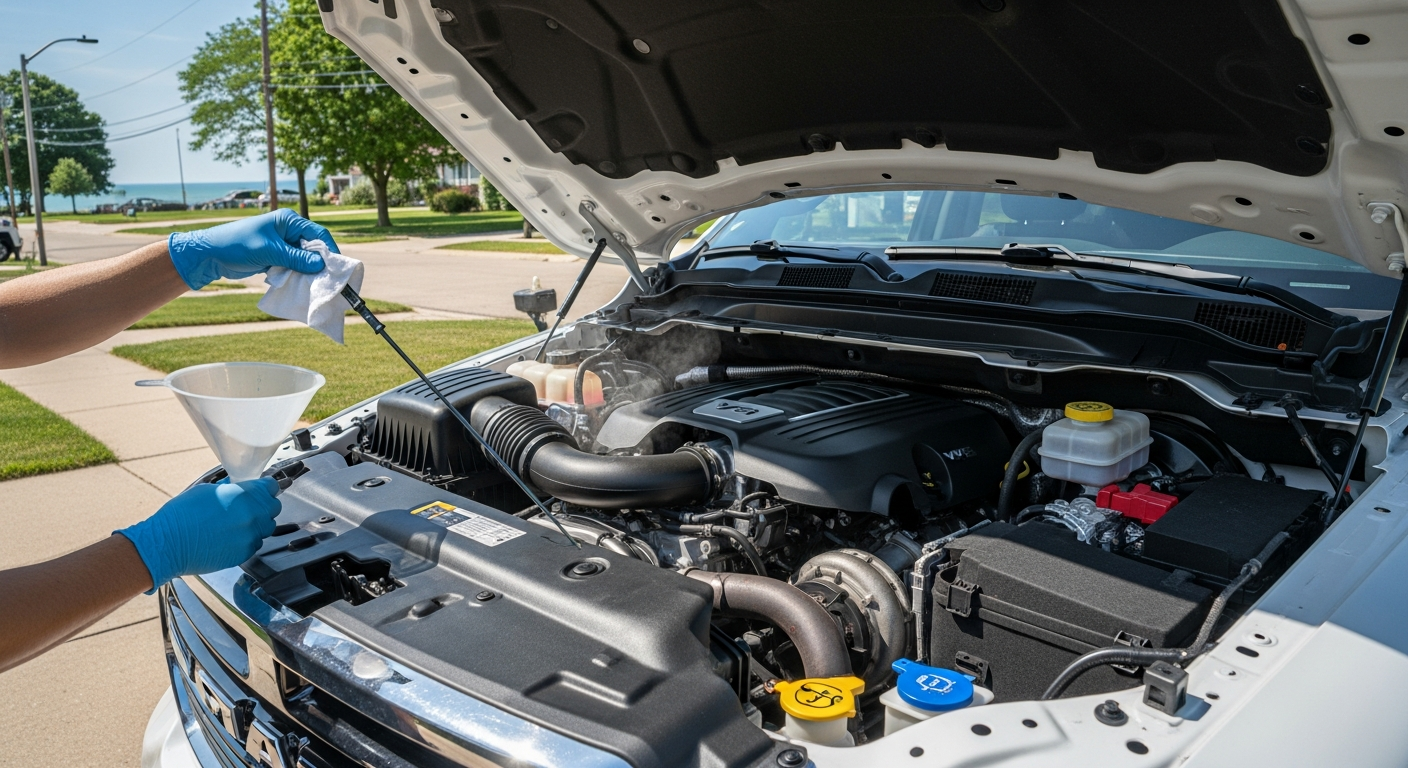
Check the dipstick before any long trip. Worn gaskets, oil pans, or seals can leak oil, and a burnt oil smell or blue smoke from the tailpipe both signal it's time for service rather than waiting for the next scheduled interval. Dark, gritty oil on the dipstick is another sign the current oil has already lost its protective properties.
Practical Summer Maintenance Tips Beyond the Oil Change
Pair oil service with a coolant level check, tire pressure check (heat increases pressure), and a battery test, since summer heat also shortens battery life. A multi-point inspection at every oil change catches small issues — a slipping belt, a low coolant reservoir — before they become roadside breakdowns on a summer trip.
Where Can I Get a Reliable Oil Change in St. Joseph?
Reed Jeep RAM of St. Joseph's factory-trained technicians perform Mopar-backed oil changes and multi-point inspections on every Chrysler, Dodge, Jeep, and Ram model. Current offers include two Mopar synthetic oil changes for $145 (up to 7 quarts each) and two diesel oil changes for $280 (up to 13 quarts each, excluding EcoDiesel). Owners can schedule an oil change online ahead of a summer road trip rather than waiting for a warning light.
Frequently Asked Questions
Where can I get a reliable oil change in St. Joseph, MO?
Reed Jeep RAM of St. Joseph, located at 4525 Commons Drive, offers factory-trained technicians and genuine Mopar parts for Chrysler, Dodge, Jeep, and Ram vehicles. Owners can book online through the dealership's schedule service page and typically get same-week appointments during summer months.
How many miles can I go between oil changes on a Ram 1500?
Under normal driving, a Ram 1500's oil life monitor often allows up to 10,000 miles between changes depending on the HEMI or Hurricane engine. Towing, hauling, or extended idling in summer heat count as severe-duty use and should shorten that interval toward the 5,000-mile range.
How much does a Mopar synthetic oil change cost?
Reed Jeep RAM of St. Joseph currently offers two Mopar synthetic oil changes for $145, covering up to 7 quarts of oil, a filter, and a multi-point inspection per visit. Diesel trucks (excluding EcoDiesel) are covered under a separate two-change package priced at $280 for up to 13 quarts each.
Does hot weather mean I need a different oil weight?
Not usually — stick with the oil weight and grade listed in the owner's manual, since Chrysler, Dodge, Jeep, and Ram engines are engineered around that specification. What changes in summer is the urgency of staying on schedule, since heat degrades oil faster regardless of the weight used.
What happens if I skip an oil change during summer?
Skipping a change lets oxidized, thinned oil keep circulating, which increases friction, heat, and wear on internal components. Left unchecked through a hot Missouri summer, this can accelerate engine wear and lead to more expensive repairs than a routine service visit would have cost.
Schedule Your Summer Oil Change at Reed Jeep RAM of St. Joseph
Before the next heat wave or road trip out of St. Joseph, get ahead of summer's toll on engine oil. Reed Jeep RAM of St. Joseph makes it easy to schedule a Mopar oil change today, and our team can also walk owners shopping for a new Ram, Jeep, or minivan through the current new vehicle lineup built to handle North Missouri's summer heat and winter road-salt seasons alike. Questions about service scheduling or hours? Contact Reed Jeep RAM of St. Joseph and a service advisor will help, including guidance on preparing your vehicle for winter freezing and road salt exposure once the seasons turn.